
W ramach 46. Zimowej Szkoły Mechaniki Górotworu i Geoinżynierii odbędzie się już po raz drugi Konkurs dla Młodych Naukowców. Każdy, kto nie skończył jeszcze 35 lat może wziąć w nim udział, niezależnie od posiadanego stopnia naukowego. Nagrody czekają!

Politechnika Wrocławska
Advanced continuum theories
Dr. hab. F. Javier Dominguez achieved his PhD in Computational and Applied Physics with Summa Cum Laude honors at the National University of Mexico (UNAM). During his doctoral and postdoctoral studies, he joined The Institute for Advanced Computational Science at Stony Brook University, where he focused on modeling plasma-material interactions in tokamak plasmas, collaborating with the Princeton Plasma Physics Laboratory in the USA. Before joining the National Centre for Nuclear Research (NCBJ) in Poland, he was the recipient of the A. von Humboldt Research Fellowship and a Siemens Foundation scholarship at the Max Planck Institute for Plasma Physics in Germany. During this period, he created the innovative FAVAD software workflow using machine learning methods to characterize and visualize defects in damaged materials. Notably, FAVAD won the IAEA challenge, showcasing its excellence. In 2023, he attained the title of doctor habilitus (D.Sc.) in physics and an associate professor position at NCBJ. He's been invited to speak at institutions like Aalto University, Karlsruhe Institute of Technology, University of Helsinki, VTT, IPPT, and AGH University. Within NCBJ, his primary research focus on developing multi-scale numerical models seeking to understand how single crystal materials and high-entropy metal alloys respond under extreme conditions, such as high temperatures and irradiation doses. The overarching goal is to engineer and design materials suitable for applications in fusion, fission, and various industrial sectors. Dr. Dominguez actively participates in platforms like the EERA JPNM, EuroFusion, INNUMAT project, Humboldt Foundation, and EuMINe COST ACTIONS.
Deciphering the plasticity mechanisms in novel alloys is crucial for optimizing their mechanical properties. This study employs a comprehensive series of machine-learned molecular dynamics (ML-MD) simulations to investigate the nanomechanical response of single crystals in BCC W-based and FCC Ni- based solid solution alloys by nanoindentation test. We analyze dynamic deformation processes, defect nucleation, and evolution, alongside concurrent stress–strain responses. Additionally, atomic shear strain mapping provides insights into surface morphology and plastic deformation. In BCC metals, the introduction of Mo, Ta, and V atoms into the W matrices induces lattice strain and distortion, enhancing material resistance to deformation. This impedes dislocation mobility, especially for dislocation loops with a Burgers vector of 1/2⟨111⟩. Furthermore, we explore the influence of Ta, V, and Mo concentrations in W alloys, focusing on twinning and anti-twinning mechanisms during nanoindentation, contributing to material hardening.
For FCC Ni-based alloys, we observe significant hardening effects due to the presence of Fe, Cr, and Co in the samples. For this case, experimental load–displacement data show qualitative agreement with MD simulation results, providing strong evidence that the main strengthening factors are associated with sluggish dislocation diffusion, reduced defect sizes, and the nucleation of tetrahedral stacking faults. In this context, interstitial-type prismatic dislocation loops, mainly formed by Shockley dislocations, are nucleated during the loading process. Their interaction leads to the formation of diamond-shaped stacking faults, primarily created by ⅓⟨100⟩ Hirth dislocation lines. The observation of both types of defects coexisting in the same plastic deformation zone is consistent with both approaches. Reported mechanical data, measured experimentally and interpreted numerically, also align with microstructural SEM and TEM investigations. Throughout this discussion, the highlights of the advantages and limitations of both conventional interatomic potentials and machine-learned models when simulating nanoindentation tests will be presented and discussed.

Hydroprojekt Wrocław spółka z o.o.
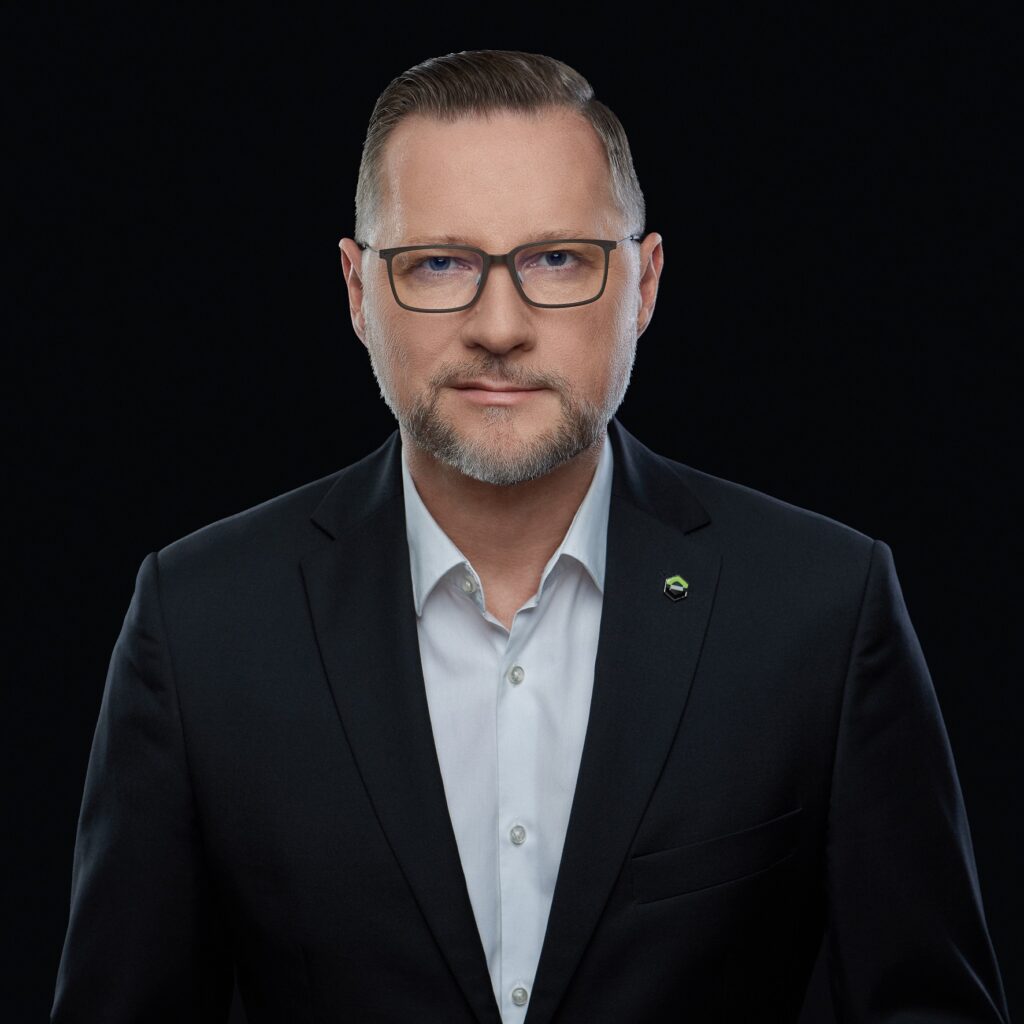
Akademia Górniczo-Hutnicza im. Stanisława Staszica w Krakowie

Akademia Górniczo-Hutnicza im. Stanisława Staszica w Krakowie

Generalna Dyrekcja Dróg Krajowych i Autostrad
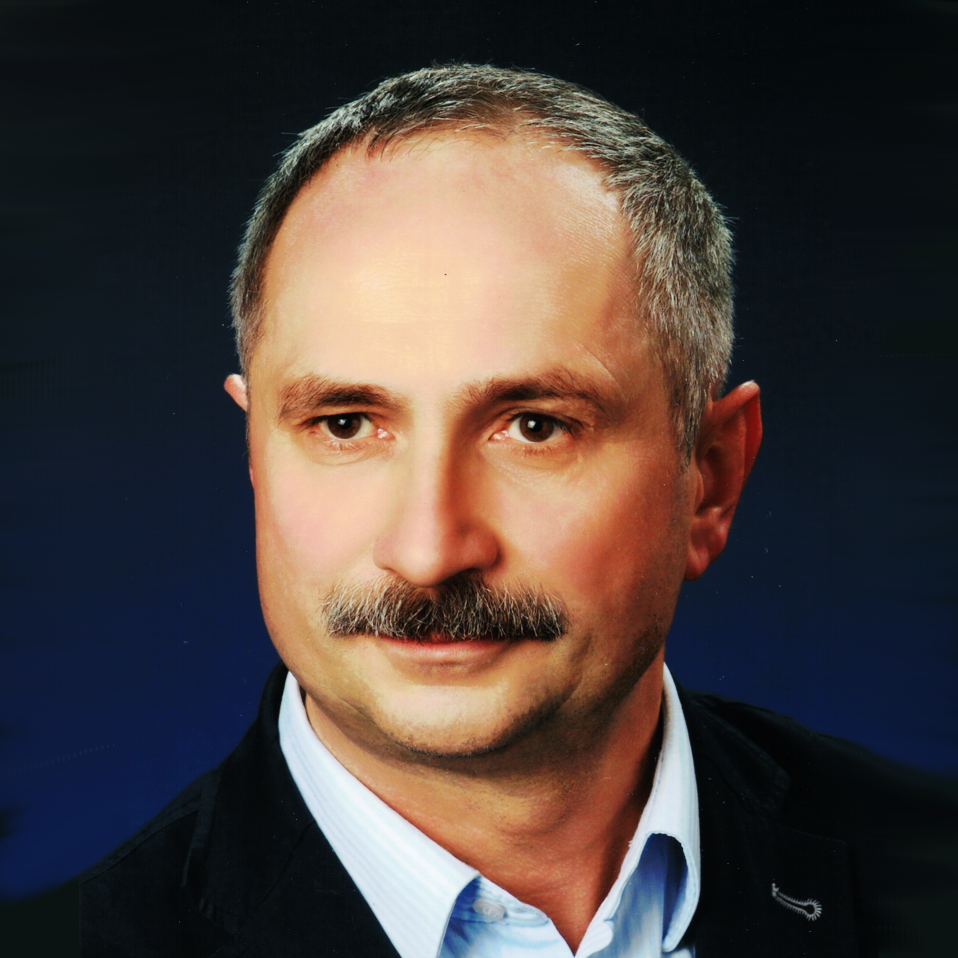
Politechnika Krakowska
Akademia Górniczo-Hutnicza im. Stanisława Staszica w Krakowie
Akademia Górniczo-Hutnicza im. Stanisława Staszica w Krakowie
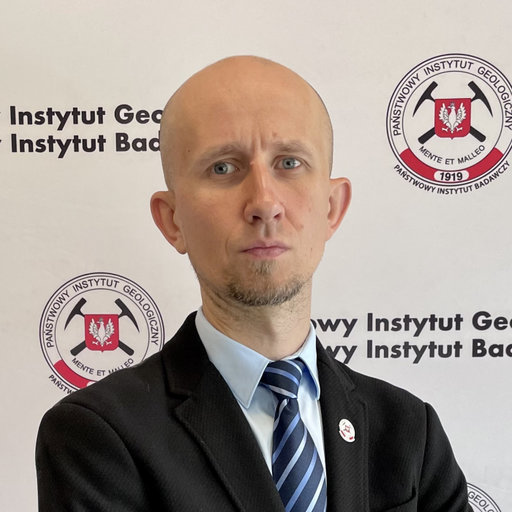
Państwowy Instytut Geologiczny
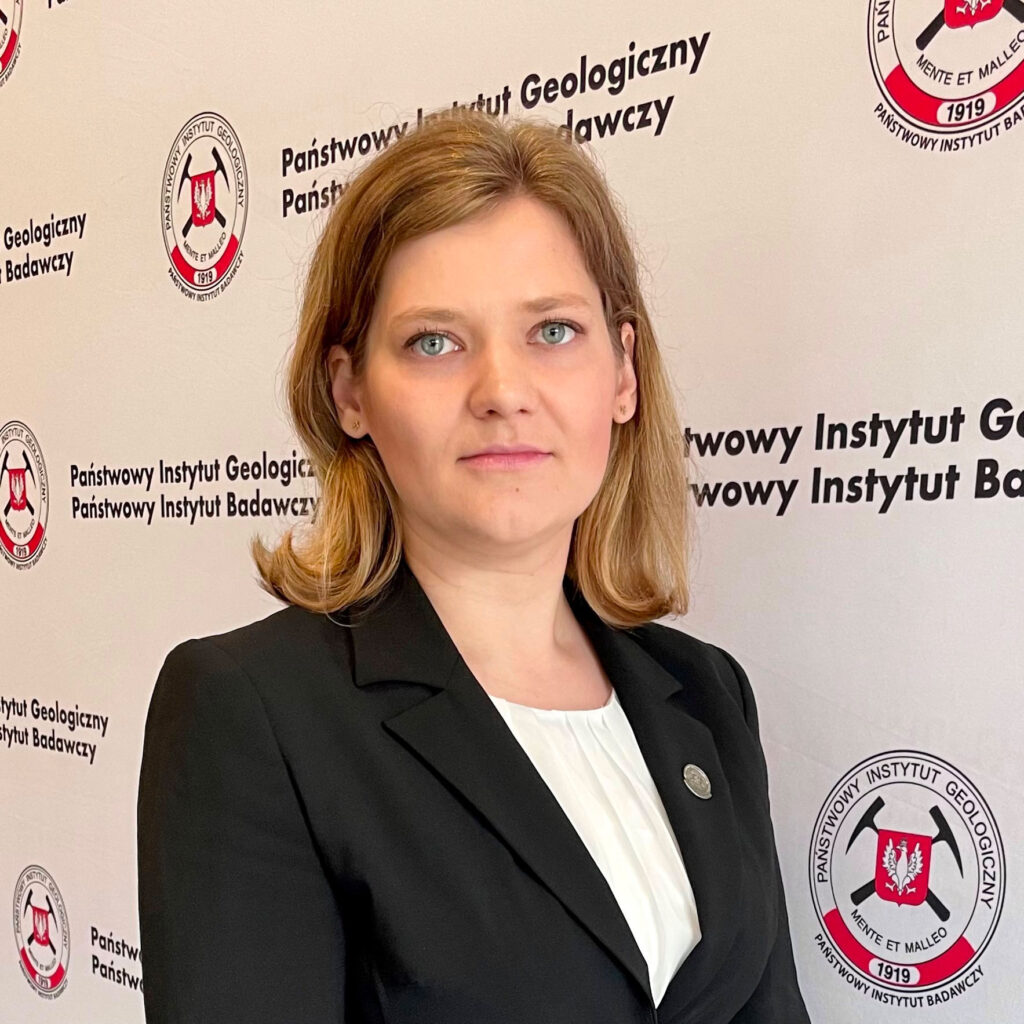
Państwowy Instytut Geologiczny
Akademia Górniczo-Hutnicza im. Stanisława Staszica w Krakowie
Advanced continuum theories
Dr. hab. F. Javier Dominguez achieved his PhD in Computational and Applied Physics with Summa Cum Laude honors at the National University of Mexico (UNAM). During his doctoral and postdoctoral studies, he joined The Institute for Advanced Computational Science at Stony Brook University, where he focused on modeling plasma-material interactions in tokamak plasmas, collaborating with the Princeton Plasma Physics Laboratory in the USA. Before joining the National Centre for Nuclear Research (NCBJ) in Poland, he was the recipient of the A. von Humboldt Research Fellowship and a Siemens Foundation scholarship at the Max Planck Institute for Plasma Physics in Germany. During this period, he created the innovative FAVAD software workflow using machine learning methods to characterize and visualize defects in damaged materials. Notably, FAVAD won the IAEA challenge, showcasing its excellence. In 2023, he attained the title of doctor habilitus (D.Sc.) in physics and an associate professor position at NCBJ. He's been invited to speak at institutions like Aalto University, Karlsruhe Institute of Technology, University of Helsinki, VTT, IPPT, and AGH University. Within NCBJ, his primary research focus on developing multi-scale numerical models seeking to understand how single crystal materials and high-entropy metal alloys respond under extreme conditions, such as high temperatures and irradiation doses. The overarching goal is to engineer and design materials suitable for applications in fusion, fission, and various industrial sectors. Dr. Dominguez actively participates in platforms like the EERA JPNM, EuroFusion, INNUMAT project, Humboldt Foundation, and EuMINe COST ACTIONS.
Deciphering the plasticity mechanisms in novel alloys is crucial for optimizing their mechanical properties. This study employs a comprehensive series of machine-learned molecular dynamics (ML-MD) simulations to investigate the nanomechanical response of single crystals in BCC W-based and FCC Ni- based solid solution alloys by nanoindentation test. We analyze dynamic deformation processes, defect nucleation, and evolution, alongside concurrent stress–strain responses. Additionally, atomic shear strain mapping provides insights into surface morphology and plastic deformation. In BCC metals, the introduction of Mo, Ta, and V atoms into the W matrices induces lattice strain and distortion, enhancing material resistance to deformation. This impedes dislocation mobility, especially for dislocation loops with a Burgers vector of 1/2⟨111⟩. Furthermore, we explore the influence of Ta, V, and Mo concentrations in W alloys, focusing on twinning and anti-twinning mechanisms during nanoindentation, contributing to material hardening.
For FCC Ni-based alloys, we observe significant hardening effects due to the presence of Fe, Cr, and Co in the samples. For this case, experimental load–displacement data show qualitative agreement with MD simulation results, providing strong evidence that the main strengthening factors are associated with sluggish dislocation diffusion, reduced defect sizes, and the nucleation of tetrahedral stacking faults. In this context, interstitial-type prismatic dislocation loops, mainly formed by Shockley dislocations, are nucleated during the loading process. Their interaction leads to the formation of diamond-shaped stacking faults, primarily created by ⅓⟨100⟩ Hirth dislocation lines. The observation of both types of defects coexisting in the same plastic deformation zone is consistent with both approaches. Reported mechanical data, measured experimentally and interpreted numerically, also align with microstructural SEM and TEM investigations. Throughout this discussion, the highlights of the advantages and limitations of both conventional interatomic potentials and machine-learned models when simulating nanoindentation tests will be presented and discussed.
Akademia Górniczo-Hutnicza im. Stanisława Staszica w Krakowie
Advanced continuum theories
Dr. hab. F. Javier Dominguez achieved his PhD in Computational and Applied Physics with Summa Cum Laude honors at the National University of Mexico (UNAM). During his doctoral and postdoctoral studies, he joined The Institute for Advanced Computational Science at Stony Brook University, where he focused on modeling plasma-material interactions in tokamak plasmas, collaborating with the Princeton Plasma Physics Laboratory in the USA. Before joining the National Centre for Nuclear Research (NCBJ) in Poland, he was the recipient of the A. von Humboldt Research Fellowship and a Siemens Foundation scholarship at the Max Planck Institute for Plasma Physics in Germany. During this period, he created the innovative FAVAD software workflow using machine learning methods to characterize and visualize defects in damaged materials. Notably, FAVAD won the IAEA challenge, showcasing its excellence. In 2023, he attained the title of doctor habilitus (D.Sc.) in physics and an associate professor position at NCBJ. He's been invited to speak at institutions like Aalto University, Karlsruhe Institute of Technology, University of Helsinki, VTT, IPPT, and AGH University. Within NCBJ, his primary research focus on developing multi-scale numerical models seeking to understand how single crystal materials and high-entropy metal alloys respond under extreme conditions, such as high temperatures and irradiation doses. The overarching goal is to engineer and design materials suitable for applications in fusion, fission, and various industrial sectors. Dr. Dominguez actively participates in platforms like the EERA JPNM, EuroFusion, INNUMAT project, Humboldt Foundation, and EuMINe COST ACTIONS.
Deciphering the plasticity mechanisms in novel alloys is crucial for optimizing their mechanical properties. This study employs a comprehensive series of machine-learned molecular dynamics (ML-MD) simulations to investigate the nanomechanical response of single crystals in BCC W-based and FCC Ni- based solid solution alloys by nanoindentation test. We analyze dynamic deformation processes, defect nucleation, and evolution, alongside concurrent stress–strain responses. Additionally, atomic shear strain mapping provides insights into surface morphology and plastic deformation. In BCC metals, the introduction of Mo, Ta, and V atoms into the W matrices induces lattice strain and distortion, enhancing material resistance to deformation. This impedes dislocation mobility, especially for dislocation loops with a Burgers vector of 1/2⟨111⟩. Furthermore, we explore the influence of Ta, V, and Mo concentrations in W alloys, focusing on twinning and anti-twinning mechanisms during nanoindentation, contributing to material hardening.
For FCC Ni-based alloys, we observe significant hardening effects due to the presence of Fe, Cr, and Co in the samples. For this case, experimental load–displacement data show qualitative agreement with MD simulation results, providing strong evidence that the main strengthening factors are associated with sluggish dislocation diffusion, reduced defect sizes, and the nucleation of tetrahedral stacking faults. In this context, interstitial-type prismatic dislocation loops, mainly formed by Shockley dislocations, are nucleated during the loading process. Their interaction leads to the formation of diamond-shaped stacking faults, primarily created by ⅓⟨100⟩ Hirth dislocation lines. The observation of both types of defects coexisting in the same plastic deformation zone is consistent with both approaches. Reported mechanical data, measured experimentally and interpreted numerically, also align with microstructural SEM and TEM investigations. Throughout this discussion, the highlights of the advantages and limitations of both conventional interatomic potentials and machine-learned models when simulating nanoindentation tests will be presented and discussed.